
A Cloth of Many Colored Strips

Back in 1979-1980, then in 1985 and 1993, my wife, the anthropologist Alma Gottlieb, and I lived in small, remote villages of the Beng people of the Ivory Coast. In recent days Alma and I have found it difficult to watch the tragic news coming from the country: videos of military strikes and violence in Abidjan, the country’s largest city, and photos of dead bodies strewn across streets we’d once walked.

All this has seemed like the horrific endgame of a lovely country’s slow, 30-year long downward spiral of corruption, economic and political crisis and civil war, and I’m reminded of this quote from the Ivorian writer Amadou Kourouma’s novel The Suns of Independence (a classic of West African literature): “God made this life like a cloth of many colored strips: one strip the color of happiness and joy, one strip the color of poverty and illness, one strip the color of insult and dishonor.”

The country’s recent troubles were spurred in large part by ethnic demonizing and exclusion; this is a terrible irony considering the great strength of Ivory Coast’s ethnic and cultural diversity. A recent film and music project, Abidja’Taam, le goût d’Abidjan, celebrates that diversity.

The CD is a collection of slow, soulful songs from a wide range of Ivorian musicians, a 45-minute gentle rebuke to the country’s recent madness. Listening to this beautiful music, I can imagine that once again Ivory Coast will find itself settled on the strip of cloth that’s the color of happiness and joy. Here is a video from the project, the song “Don,” sung by Tiken Jah Fakoly.

Share
April 13th, 2011 by admin | No Comments »

The Life We Learn to Lead as Writers

After my last post, on the units of structure Shakespeare employed in his plays, scenes arranged as diptychs and triptychs, I thought I’d continue my thoughts on structure in writing by quoting a prose poem by the poet David Ignatow, titled “The Life They Lead”:

“I wonder whether two trees standing side by side really need each other. How then do they spring up so close together? Look how their branches touch and sway in each other’s path. Notice how at the very top, though, they keep the space between them clear, which is to say that each still does its thinking but there is the sun that warms them together.

“Do their roots entangle down there? Do they compete for nourishment in that fixed space they have to share between them, and if so, is it reflected in their stance towards one another, both standing straight and tall, touching only with their branches. Neither tree leans towards or away from the other. It could be a social device to keep decorum between them in public. Perhaps their culture requires it and perhaps also this touching of branches is to further deceive their friends and associates as to the relationship between them—while what goes on beneath the surface is dreadful, indeed, roots gnarled and twisted or cut off from their source by the other and shrunken into lifelessness, with new roots flung out desperately in a direction from the entanglement, seeking their own private, independent sources. As these two trees stand together, they present to the eye a picture of benign harmony, and that may be so, with both dedicated to the life they lead.”

What does this have to do with structure? This prose poem offers us visually two trees, standing side by side in a symmetrical arrangement, the view we have of trees day by day. But there is another symmetry, a secret diptych: the branching system above ground is echoed by the branching root system below ground. The two systems roughly mirror each other, and it is instructive to remember that every tree we see as we go about our daily lives is really only half that tree.

So, we have the benign pairing of trees above ground, the more fearful symmetry of the trees below ground, their roots competing for sustenance. Two seemingly peaceful and yet warring trees can of course be seen as a statement on the tug and pull of human relationships, on how psychological tension balances collaboration. But this seems to me to also be a good model for structure. Writers try to build, through chapters, stanzas, and sections of a short story or essay (every imaginable variation on Frost’s tennis net, really), something of tensile strength that will hold a work of the imagination together. But because it is a work of imagination, such an endeavor is not so simple. Held within the parts we fit together is a world of human ambiguity and conflict, a root system of potential chaos and entropy. The tension between the two is the life we learn to lead as writers.

We all know how messy writing can be, how guessing and chance, in addition to simple due diligence through an intractable problem, gets us to where we need to go. But through the mess of creation, structure somehow does get its say. Just as, in Ignatow’s prose poem, those chaotic, competing roots below the surface eventually grow a graceful tree. Patterns do begin to emerge. Yet the structures you choose should be as individual as your own creative vision. I’d like to emphasize this point by turning to our little friends, the ants.

There’s a myrmecologist named Walter Tschinkel of the University of Florida who has developed a peculiar specialty: He pours a gooey mixture that resembles dental plaster into ant nests; when the mixture fills all the passageways of the nest and then hardens, he digs away the surrounding dirt and is left with the architecture of the ant colony. It’s an ingenious way to study the structure of ant societies, though perhaps we shouldn’t dwell too much on all those drowned ants preserved within his plaster-like pastes.

What Tschinkel discovered is that every ant species builds a different shaped nest. They each have “a specific nest design, and each builds from a particular set of rules,” as Jack McClintock states in a Discover magazine article. A particular set of rules that build a specific design . . . sounds a lot like Shakespeare’s manipulation of scenes into combinations of diptychs and triptychs.

Each ant colony is a formal, planned shape, built to contain the teeming life within. This particular ant nest resembles an underground tornado, a seeming chaos of design slimming down to a narrow base:

This nest, in contrast, resembles a far more staid series of steps going down:

It reminds me of the chart Italo Calvino worked up for his novel If on a Winter’s Night a Traveler—but only after he had written the book.

All structure leans toward elegance, I believe, even when it might at first seem a little lop-sided. Examining closely a book’s architecture will reveal much of its meaning as well. One example is the structure of Yann Martel’s first novel, Self, which I mentioned in my previous post. Another example is the story collection A Song for Nettie Johnson, by Gloria Sawai (winner of Canada’s Governor General’s Literary Award), which is dominated by the novella-length title story (and by the way, how can anyone not love a book that ends with a story titled “The Day I Sat with Jesus on the Sundeck and a Wind Came Up and Blew My Kimono Open and He Saw My Breasts”?).

Sawai’s novella that begins the collection (and clocking in at ninety pages it’s nearly a third of the entire book) is a tale of two damaged people who somehow manage to create a working relationship, as if their two separate internal limps balance each other out (two trees, anyone?). Religion and art and the imagination also figure largely in this title story, and it seems as if Sawai at first sets forth the grand themes of her work in this novella so that the eight shorter stories that follow become variations, as if we’ve left the larger lake and are now making our way through the winding tributaries.

We build our books in much the way different species of ants construct their underground homes, with an astonishing variety of invention. And so the shape of our stories and poems and essays become personal mirrors that reflect our secret selves.

Share
March 23rd, 2011 by admin | 9 Comments »

What’s Structure Got to Do with It?

More years ago than I like to count, when I was but a first year graduate student in creative writing, I came upon a slim volume in a bookstore titled Shakespearean Design, by Mark Rose. I pulled it off the shelf and gave it a glance, because I was taking a summer literature course on the Bard and soon found myself deep in a book that would influence me as a writer for the rest of my life.

Not many people know this, but Shakespeare never divided a single play into five acts. As Mark Rose notes, “In Shakespeare’s lifetime not one of his plays was published with any division of any kind.” And yet all his plays, as we know them today, go hummingly about their business from curtain rise and act one on through to act five and curtain close. These divisions were added to the plays many years after Shakespeare’s death.

So if our greatest playwright never tinkered with five acts (or any acts), what sort of structure did he use to shape his narratives—surely he didn’t simply scribble away?

It turns out he was influenced by late medieval and early renaissance diptych and triptych paintings. Think of Hieronymus Bosch’s The Temptation of Saint Anthony, as an example of a triptych (click to enlarge),

and here’s an example of a diptych painting, by Hans Memling:

In both forms, the individual painting can stand alone, but is given greater meaning and context when seen as part of a series. And in his plays, Shakespeare used the diptych and triptych as his basic units of structure. Here’s a diagram Mark Rose has worked up for the opening of King Lear:

Here’s a classic triptych structure, with the brief prologue and epilogue framing a much larger scene in the middle. Notice how the first and third scenes have very nearly the same number of lines, creating an elegant symmetry, while their very briefness is juxtaposed with the large court scene, the one where Lear has a fit and divides his kingdom. Also, the prologue and epilogue are private scenes, where characters gossip or conspire, in contrast to the grand public spectacle of the middle scene.

Shakespeare was never one for cookie-cutter regularity, and was more than capable of interesting change-up when it came to framing scenes. This next diagram is from Othello:

Here Shakespeare uses an arch form to shape the narrative, two framing diptychs that surround a central scene. Again, notice the elegance of how the paired scenes (Iago and Othello; Othello alone/Iago alone) are nearly the same length. And it’s the center scene, Iago’s discovery of the handkerchief, which sets off the drama, the single act around which these two characters’ fates will revolve.

Rose’s beautifully written analysis is filled with smart diagrams like the two above, and reading through the book one gets a sense of the infinite possibilities of structure, how manipulating the placement of small units can lead to a greater whole. And once you’re clued into these Lego-like building principles, you can find them in many different art forms. The Fourth String Quartet by the 20th century composer Bela Bartok, for example, has a structure nearly identical to the opening of Othello:

The first and fifth movements share musical themes and material, as do the second and fourth movements, and the middle movement stands apart, its eerie musical material particular to itself. One could see this as a kind of rhyme scheme: ABCBA.

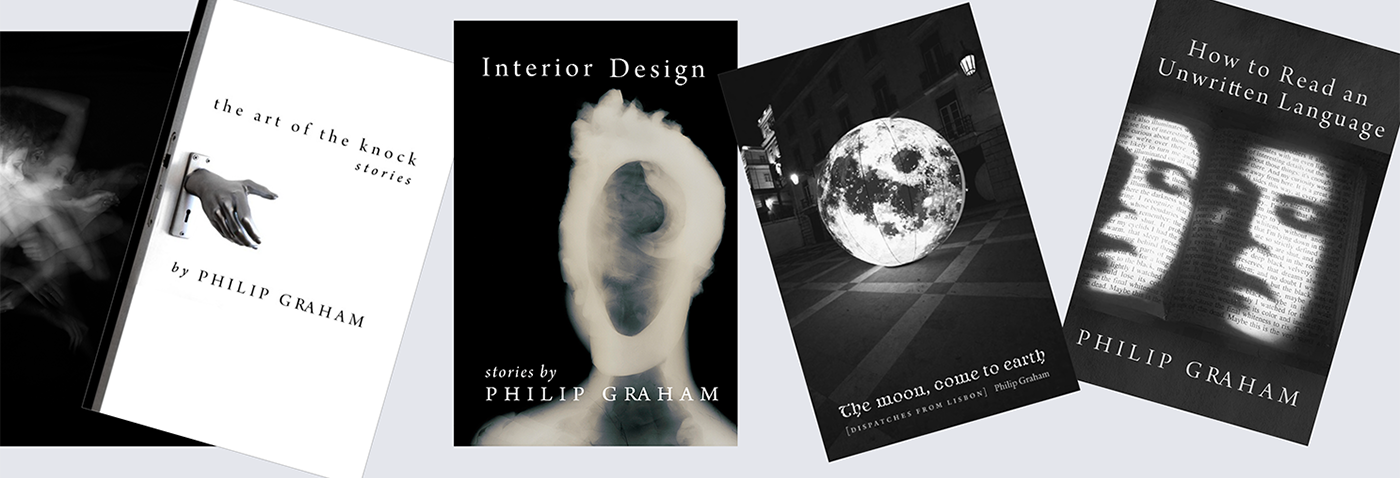
This arch form was an influence on the structure of my second book, The Art of The Knock, though I built mine out of seven sections. David Mitchell’s magisterial Cloud Atlas employs a grand version of the arch structure, which can be read as: ABCDE F EDCBA, an arch, but also an elaborate triptych.

We structure our fictions, and we also structure our memories. Sven Birkerts, in his marvelous book The Art of Time in Memoir, describes the “time frame” of Geoffrey Wolff’s The Duke of Deception. Wolff begins his memoir with the sudden announcement by phone, as he’s vacationing in Narragansett, of his father’s death, then employs the bulk of the book to tell the narrative of his life with his father, and then ends with a return to the site of Narragansett. Another triptych.

Yet must structure always aspire to symmetry? Yann Martel’s first novel, Self, serves as an effective counter argument. The novel is comprised of only two chapters. The first is 329 pages long. Chapter two is a single page. It’s hard to imagine a more lop-sided diptych than this, but that final second chapter more than holds its own with its bulkier companion.

Did any of these writers have their structure set in mind from the beginning? Maybe. I like to think, though, that these various shapings come about through the writing. If conceived of too soon, a structural plan could easily turn constricting. But if an architecture arises from the thicket of writing’s multiple discoveries, then it gives shape to what might otherwise remain amorphous.

Share
February 23rd, 2011 by admin | 10 Comments »

Yet Another Chapter One

One of my favorite novels in recent years is I, the Divine (A Novel in First Chapters), by the Lebanese-American writer Rabih Alameddine. It’s a brilliant novel in the form of a memoir, written by one Sarah Nour El-Din, and it’s an evolving memoir at that, which is where the subtitle comes in. Every chapter in the book is a Chapter One. That’s right, the reader finishes the first chapter, turns the page, and there’s another chapter one waiting. And then another chapter one and so on: page after page of beginnings.

Sarah can’t seem to find the proper footing into her memoir, and so she begins again, trying to start from this angle, then that angle. Though each chapter is in and of itself engaging (at least to this reader), Sarah hasn’t yet captured for herself the right tone, or the most fruitful approach to the rest of her life’s story.

And yet, through all these failed first chapters, the reader begins to gain a deeper sense of her life, as empty narrative spaces slowly get filled in. We learn of her marriages, her lover, her son, father, mother, stepmother, sisters, grandfather, her life in Lebanon and in America, and her artistic ambitions.

Eventually, a first chapter takes on a shameful secret (one of many in this family), that Sarah’s sister Lamia was a serial murderer—a nurse who overdosed her patients to death. Sarah feels she can’t begin to explain her sister’s actions, so instead she announces “I will let her speak for herself” and includes in the chapter her sister’s awkwardly eloquent letters.

Through this seeming defeat of imagination, this reliance on her sister’s own words, something seems to break through to Sarah. Lamia’s letters have allowed Sarah to see her sister from the inside, bringing with it a level of empathy she never had before. Two first chapters later Sarah writes about a day in the life of her stepmother Saniya, from what she imagines is her stepmother’s point of view. And again, her understanding of and empathy for Saniya deepens. A few first chapters later, Sarah imagines a walk through the streets of New York from her first husband’s point of view.

Sarah is of course fictionalizing—she can’t really know what her husband thought as he walked from classroom to apartment, can’t know what terrain her stepmother’s thoughts might occupy. But seemingly for the first time, Sarah is thinking of others, not herself, she is trying to interpret them, understand them. And in so doing, the relentless I, I, I of memoir deepens from the singular self to the multiple competing selves of family dynamics. Sarah is no longer the center of the universe but a part of the universe, and this helps her move from the role of victim to that of survivor, relinquishing blame for compassion.

Alameddine, a fine novelist, is perhaps taking a swipe at memoirs here, by implying that the fictional impulse of imagining others is the remedy for the solipsism of first-person memoirs. Yet the fictional impulse is indeed a major part of our nonfiction selves—constantly, every day, we try to interpret others, try to imagine their inner lives so we can better mesh with them. Because we cannot and will never be able to read minds, our interpretations are necessarily fictional, or at least fictions based upon the best available evidence. As I’ve said elsewhere on this website, “So many thought bubbles, like storm clouds, hover above us.”

Sarah becomes a survivor through imagining the points of views of others in her life because she has released herself from the trap they themselves are stuck in—the inability to empathize. That’s how victimizers go about their business: lost in their own dramas and playing out the echoes on others, unable to truly see the damage they’ve wrought, unable to imagine any point of view besides their own. Victims are locked within their own dramas.

Having escaped this interior claustrophobia, Sarah earns the last chapter of her memoir, which she labels not as yet another Chapter One, but as an Introduction.

Share
February 10th, 2011 by admin | 4 Comments »

“Cluentius Took It Badly”

A recent post on the website Brevity quotes the grandmaster essayist Philip Lopate on the creation of character in nonfiction, developing one’s “I” into a recognizable personality with enough complexity to be capable of variation, change. As Lopate says, “the writer needs to build herself into a character. And I use the word character much the same way the fiction writer does.”

I couldn’t agree more, and I especially appreciate the equality that’s implied between the fiction and nonfiction writer (being both myself). But that phrase about the fiction writer reminds me of different occasions, when I’ve heard or read an assertion that creative nonfiction “borrows” fictional techniques. I’d say, if you look a little closer, it may be quite the opposite.

The historian Herodotus, for example, is one of the earliest Greek prose writers whose work has survived largely intact; his work has been widely influential for millennia, and was certainly read, often in the original, by those 18th century giants who went on to create the modern novel: Henry Fielding, Jonathan Swift, Daniel Defoe and Laurence Sterne. These writers were probably also influenced by Anabasis, the major work of the Greek memoirist Xenophon, which was long used as a text for students of classical Greek. And it’s a good bet they were familiar with the work of Cicero, the Roman who was a major influence not only in his own time but throughout the Middle Ages, and his letters are said to have been an initiating force behind the development of the Renaissance; his Murder Trials, a collection of his legal summations, is a rollicking good read.

But let’s start with Herodotus, and his incisive psychological portrait, in The Histories, of Amasis, who was considered to be the last great Egyptian pharaoh:

“It is said that Amasis in his private life, before he came to the throne, was just as fond of his joke and his glass, and was never inclined to serious pursuits; indeed, if ever he found himself short of means to continue his round of drinking and enjoyment, he would go out on the prowl and steal, and people who claimed that property of theirs was in his possession would, if he denied it, take him off to the nearest oracle. Sometimes the oracle would convict him, sometimes not. In consequence of this, when he came to the throne, he had a low opinion of the gods who had acquitted him of theft; he neglected their temples, contributing nothing to their adornment, and never frequented them for sacrifice, on the ground that their oracles were false and they were worth nothing; those on the other hand who had convicted him, he held in the highest honor—for their oracles were true, and they were gods indeed.”

I love the elegance of this characterization, which makes me want to read on about the further doings of Amasis, the ruler who seems to respect most those who know him at his worst. He comes alive as a curiously flawed person, whose honesty stems from his dishonesty.

The attraction for me of Cicero’s Murder Trials is the author’s voice, as alive on the page as could be. Here is an eloquent lawyer (whose clients usually went free) making his case, doing his best to characterize his client in the best light, while casting other personalities in the trial into dark shadow, as can be seen in this excerpt from “In Defense of Aulus Cluentius Habitus,” where a mother seduces her daughter’s husband, forcing a divorce, and then promptly marries the man herself:

“She actually gave orders that the identical marriage-bed which she herself had prepared, two years previously, for the wedding of her own daughter should now be got ready and adorned for herself, in the very home from which her daughter had been expelled and hounded out. And so mother-in-law married son-in-law, with no one to declare the omens or give the bride away, amid the gloomiest forebodings from everyone.

“What unbelievably atrocious behavior that woman displayed! Indeed, her conduct must surely be quite unparalleled and unique. Her sexual desires must truly have been insatiable. Even if the might of the gods, the judgment of mankind, did not frighten her, it is strange indeed that she did not feel overawed by the torches, by the threshold of the bridal chamber which contained her own daughter’s bridal bed, by the very walls themselves which had gazed upon that other union. In her sensual frenzy there was no obstacle which she forbore to break through and trample down out of her way. Modesty was overcome by passionate lust, caution by unbridled recklessness, reason by mania uncontrollable.

“Her son Cluentius took it badly.”

Reading this, I imagine I can hear Cicero’s voice, the measured indignation rising before the jurists as he sets the scene of the marriage night, then quieting as he lowballs Cluentius’s reaction to his mother’s appalling behavior. Here, Cicero not only works hard to transform living, breathing people into something like fictional characters who can be efficiently understood and judged, but he spins it all with such an engaging narrative voice that he himself is added to the dramatis personae.

Finally, if there’s a fiction writer out there who can quietly and effectively build narrative tension and anticipation as well as Xenophon, please notify me immediately. Here is his portrait of a seemingly doomed military situation: ten thousand Greek soldiers abandoned hundreds of miles within Persian territory:

“With their generals arrested and the captains and soldiers who had gone with them put to death, the Greeks were in an extremely awkward position. It occurred to them that they were near the King’s capital and that around them on all sides were numbers of people and cities who were their enemies; no one was likely in the future to provide them with a chance of buying food. They were at least a thousand miles away from Greece; they had no guide to show them the way; they were shut in by impassable rivers which traversed their homeward journey; even the natives who had marched on the capital with Cyrus had turned against them, and they were left by themselves without a single cavalryman in their army . . . With all this to reflect upon they were in a state of deep despondency. Only a few tasted food that evening, and few lit fires. Many of them did not parade by the arms that night, but took their rest just where each man happened to be, and could not sleep because of their misery and their longing for their home lands and parents and wives and children, which they thought that they would never see again. In this state of mind they all took their rest.”

Xenophon slowly sets up the narrative tension by clearly laying out the hopeless particulars, and then follows by imagining the thoughts and feelings of his fellow soldiers, their worries and resignation. And the reader thinks, Well, how will they be able to survive? And reads on. Another notable feature of this book is that, though many believe that Xenophon based his memoir on diaries he wrote at the time, he takes the curious tactic of writing about himself in the third person: “Xenophon thought,” “Then Xenophon stood up and spoke as follows.” By turning himself into, in effect, a character at some remove, he manages to balance intimacy with emotional distance.

Whether in translation or the original language, these three ancient writers were certainly familiar to Sterne, Fielding, Defoe and Swift, all members of the educated class of their time. I’ll bet a nickel that they absorbed enough of the techniques of these nonfiction authors to begin spinning out their own narrative tricks of the trade into the novels we still know so well centuries later.

Share
January 1st, 2011 by admin | 2 Comments »

The Threads that Tie Us to Objects

Black Friday has come and gone, so has Black Monday, and still there are nearly three weeks left of holiday shopping. When I have a chance to slip out unnoticed, off I go alone in search of presents for my wife and children. Yet as I enter a store, am I so solitary? When I walk down the aisles, invisibly my family hovers beside me, and I imagine my daughter shaking her head and frowning, or my son grinning, as I pick through possible presents and consider whether the object I hold in my hand might produce a happy ending when finally unwrapped. Where can I find the gift that will be genuinely welcomed?

Evidence of this search for just the right connection is what James Elkins speaks of in his book The Object Stares Back: On the Nature of Seeing. As he points out, it’s easy to identify a person who is silently weighing the aptness of a purchase:

“The threads that tie us to objects are invisibly fine, and normally we scarcely notice their little tugs and pulls. But the webs of vision are there nonetheless. All those familiar gestures of shoppers—bending forward for a closer look and then straightening up, raising the eyebrows, tilting the head to one side, stepping back to think, sighing, shifting weight from one foot to the other, crossing the arms, sighing, scratching the head—those are signs that they are already caught in the web.”

The crowds in a department store all share these unconscious gestures, the signs of the inner drama of gifting: the desire to get it just right, to please the ghostly presences of friends and family who nudge us with their imagined advice. And those objects we contemplate are not passive either. As Elkins observes,

“I begin to wonder if shopping isn’t like being hunted. Instead of saying I am the one doing the looking, it seems better to say that objects are all trying to catch my eye, and their gleams and glints are the hooks that snare me. A harmless display case of watches becomes a forest of traps, a dangerous place for my eyes. Every shining dial and silver band is a barb, a tiny catch just the size of my eye. Perhaps shoppers are like fish who like to swim in waters full of hooks.”

I remember my distant glory days of pouring through the racks of LPs in a record store (remember those?), working my fingers through the alphabetically labeled bands until something new caught my attention: some obscure group’s latest record, or a singer I’d never heard of but whose album cover held a certain promise. The arrestingly explosive front cover of an album by a then unknown band named Led Zeppelin encouraged me to glance at the other side and discover that Jimmy Page, lately of the Yardbirds, was the guitarist for this new group. Hmmm, this might be worth buying, I thought. What drew me to those bins of LPs was the promise of surprise. Yet often I did know what I was looking for. That’s when one turns from hunted to hunter.

“Shopping is also hunting,” Elkins states. “After all, I am the one who decides to go shopping, and normally I’m on the lookout for something in particular: I’m hunting for it and trying to pick it out of the thousands of objects that I do not want . . . In this way of looking at things, the watches are all camouflaged: each is almost identical to the next, and the one I want is somewhere among them. Like a leopard hunting in the jungle, I can look at a tangle of leaves, vines, and flickering lights and pick out just half of the pupil of a frightened deer.”

What adventure awaits me in these next few weeks! I prowl the aisles, circle the store displays with a posse of invisible companions, who add their familiar spoken inflections to my inner voices as I search for and in turn am searched by potential gifts, a hunter transforming to prey back to hunter back to prey, all within a few short steps through a forest of holiday cheer.

Share
December 7th, 2010 by admin | No Comments »

Inhaling Isaac Newton

Though I’ll happily plunk down the dough for a ticket to anywhere—travel being one of my major food groups—when I’m home, I’m home, happy to settle in with a few simple needs. Just give me some music (currently South African singer Simphiwe Dana, French guitarist Thierry Robin’s Kali Sultana, and Warpaint’s The Fool are in heavy rotation), and set a book on my lap (I’m moving back and forth right now between Paul Harding’s Pulitzer Prize-winning novel Tinkers, and Oliver Sacks’ newest, The Mind’s Eye) and I am one contented soul.

Which is why I happen to love my dog-eared copies of the work of David Bodanis, particularly The Secret House and The Secret Family. Bodanis digs into the peculiar realities of home that go unnoticed: the life of dust mites, the startling ingredients of toothpaste, the action of starch granules in biodegradable plastic, the radical thinness of detergent bubbles, the epic expeditions of slime molds in our backyards, the ordinary static on the clock radio:

“Certain of the hissings are the cries of distant exploding stars, consumed in their death throes and sending out massively powerful particle radiation across space and time in the process of obliteration. Other static comes from lightning strikes on distant continents, which send electro-magnetic pulses through the upper atmosphere that travel across deserts and seas into the bedside radio.”

Maybe that’s the secret behind my enjoyment of these books: Bodanis has turned home into a form of travel.

His matter-of-fact tone takes the edge off what can sometimes be disturbing content, such as what is cast into the air when a toilet flushes, or how much is “normal” leaking from a microwave oven. Or this:

“Fragments of Isaac Newton come floating up the stairs. This isn’t because it’s a house bought from a wild-eyed Stephen King-like real estate agent, giving the parents such a special price and answering with a haunting laugh when they asked why it was on the market at such a bargain. Sir Isaac is actually floating up the stairs of every family’s house this morning, as always.”

Bodanis continues: “The reason is that the human body contains at least 10 to the 25th power nitrogen atoms, and long after a person’s life has ended, a sufficient number of those molecules filter into the atmosphere to drift to almost every parcel of air. [One’s] distant ancestors are rolling up with Sir Isaac too, finally to meet (and be breathed in by) their progeny.”

Talk about air pollution! It’s not enough to worry about particulates of coal dust and car exhaust, microscopic bits of insects or foodstuffs lining my lungs, now I have to face the thought of a molecule of my beloved paternal grandmother floating up a nostril, or my step-grandfather on my mother’s side (the fellow who survived as a crewman on the Titanic) circling about some alveoli. Not to mention all those strangers: a former librarian from Butte, Montana; Richard Nixon; a pasta chef from Florence, Italy; a Tibetan baby, dropped one exhausted night. How filled with others is a simple sigh.

We inhale them, we exhale them, they are present in every sneeze—as we one day will be, and sooner than you think:

“There’s also a certain amount of your own self always coming back,” Bodanis writes, “for every nine years or so almost every single molecule that makes you has gone, either floated away or poured out. This solid stuff that was you doesn’t stay dispersed, and in its random travels some will steadily—in small parts—come rolling back home too.”

So, hello, wailing infant Philip, Philip telling his first lie, callow pimpled teenage Philip, Philip flattened by malaria, Philip stunned by a July sunset while fireflies flit in the foreground, Philip with a full head of hair (you especially are welcome), please try not to jostle each other so much as you re-circulate within your future self.

Photo credits:
Newton’s Ghost from Flicker
Lightning from Slow Motion Lightning Strikes

Share
November 13th, 2010 by admin | 2 Comments »

A Map of What?

Because I am a lover of islands—I prefer being water-locked to land-locked—this past week I have been paging through with increasing delight Judith Schalansky’s Atlas of Remote Islands. First off, her book’s subtitle jumps out at you: “Fifty Islands I Have Never Set Foot On and Never Will.” Some islands, I suppose, are better for piquing the imagination.

And what islands! Scattered across vast stretches of the Atlantic, Pacific, Indian, Arctic and Antarctic oceans, some of them are so remote it’s a wonder they were ever discovered before the advent of the sweeping eyes of orbiting satellites.

An author who is map as well as island haunted, Schalansky opens with a preface on her childhood discovery of cartography and the clarity of its continuing romance as a subject: “In an atlas, the Earth is as flat as it was before explorers pinned down the white spaces of enticingly undiscovered regions with contours and names, freeing the edges of the world from the sea monsters and other creatures that had long held sway there.”

Then Schalansky really gets down to business, devoting two facing pages to each island. On the right, a map of an island is centered in its blue cradle, lovingly but not overbearingly detailed, whether it’s a glorified coral reef or an uninhabited mountainous dot or an ice encrusted bit of land. On the left she offers a page of text, letting the reader know when the island was discovered and by whom, how many inhabitants (if any), and how far away it lies from its nearest neighbors (sometimes quite far), and she expands on some pertinent odd detail she has encountered in her research on each faraway place, a little Borges-like essay. On Macquarie Island a sailor is overwhelmed by an enormous flock of birds. A man spends sixteen years on Cocos Island, digging innumerable holes in search of pirate treasure. Christmas Island is home to 1400 people and a “red carpet” of 120 million crabs. Lonely Island, in the Arctic Ocean, has another name: Solitude Island.

Here is Schalansky’s map of the Pacific island of Pukapuka, whose 600 inhabitants live 700 kilometers from their next closest neighbors in Samoa. The people of Pukapuka, Schalansky informs us, have few social rules regarding sex, except for this curious exception: you can sing before or after sex, but never during. What must these songs sound like, and is it impolite to listen in? Do lovers sing separate songs, or do they harmonize?

Not all of Schalansky’s islands are remote—at least, I happen to have come close to one of the islands included in her book, Brava. It’s one of the ten islands of the former Portuguese colony of Cape Verde, nestled off the coast of West Africa. I’ve visited São Tiago, São Vicente and Santo Antão, strange rugged rocky places swept by the dry winds of the nearby Saharan desert, where every touch of green is an exclamation point. Cape Verdeans struggle to survive from rare rain to rare rain, while accepting the consolations of art: the culture of the archipelago is replete with world-class writers, artists, composers, musicians and singers. I respectfully offer Ms. Schalansky the suggestion that she break the pact of her subtitle and give Brava a try.

Since I’m on the topic of Portuguese islands, there’s no way I’ll stay silent about the archipelago of the Azores, nine jewels floating smack dab in the middle of the Atlantic ocean. I’ve only been to one because the island that I have visited (and twice), São Miguel, is so damn beautiful. Those eight other islands will just have to wait. I’m not exaggerating when I say that São Miguel is my favorite place on earth. One of its many stellar sights is the ancient (and seven kilometers in diameter) volcanic crater of Sete Cidades, which includes within it four lakes, pasture land, lush green hills, a stretch of crater wall that rises a thousand feet high, and a small village (complete with bandstand for holiday celebrations).

Tell me that even a cursory swipe of your eyes over the photo above doesn’t make you want to book a flight forthwith. And bring a good map. Judith Schalansky might appreciate this one of the Sete Cidades crater, which shows the roads and trails one can follow, all four of the crater lakes, and the seemingly endless lovely blue veins of streams that lead from the crater walls to the ocean.

Glancing back and forth from photo and map can leave one a little dizzy, offering as it does separate and yet compatible realities of an identical nexus of latitude and longitude. As Schalansky observes, “The two-dimensional world map strikes a compromise somewhere between impertinently simplifying abstraction and an aesthetic appropriation of the world.”

Now this is the given of maps, the trade-off of distortion for revelation. But many maps have a built-in deliberate distortion, one that is not meant for you or me. As Mark Monmonier, author of How to Lie with Maps, reveals,

“Though none dare talk about it, publishers of street maps turn to each other for street names and changes. The euphemism for this type of compilation is “editing the competition,” but the legal term is copyright infringement—if you crib from a single source and get caught. To be able to demonstrate copyright infringement in court, and possibly enjoy a cash settlement by catching a careless competitor in the act, map publishers have been known to deliberately falsify their maps by adding ‘trap streets.’ As deterrents to the theft of copyright-protected information, trap streets are usually placed subtly, in out-of-the-way locations unlikely to confuse or antagonize map users.”

I love the idea of this, fictional streets and small towns dotting the landscapes of maps, hiding from our unsuspecting eyes. I couldn’t resist giving a character, in my novel How to Read an Unwritten Language, this devious job of planning trap streets. Oddly enough, when I later lived with my family in Lisbon for a year, our apartment stood one block away from an undeveloped field that, on one popular map of Lisbon, featured not one but two trap streets. Whenever I passed by, I’d give a silent nod to those invisible false roads.

Finally, since I’ve been rambling on the topic of islands, it would be remiss of me not to further ramble my way to a mention of Stephen Marche’s Shining at the Bottom of the Sea, an anthology of the little-known but excellent short fiction of the Atlantic island of Sanjania. As Leonard King rightly asserts in his preface to Marche’s anthology, “Sanjanians are perhaps the most literary people on earth.”

And I appear to have one last bit of ramble in me, this time on the topic of maps. Dinty W. Moore’s “Mr. Plimpton’s Revenge” is an essay that is laid out as an evolving Google map, the geography of memory and landscape moving in tandem—may it spawn an entire new genre!

Map of Pukapuka, Judith Schalansky, from Atlas of Remote Islands
Map of Sete Cidades, from Landscapes of the Azores, A Countryside Guide

Share
October 22nd, 2010 by admin | 6 Comments »

Oranges, Oranges

Summer has faded away, though warm days still linger, and I find myself marking how fresh figs, peaches, plums and nectarines vanish from the market. Of these I miss figs the most, their season is so short, and the dried version of a fig is such an inadequate substitute—it’s almost a slur on the original. Yet thanks to California and Florida, as well as some far-flung regions of the world, oranges will always be with us.

In the morning, in the absence of summer fruits, I begin to fully appreciate an orange cut in quarters beside a piece of toast and a cup of coffee. Or if not an orange itself, then a small glass of orange juice, part of an ideal breakfast. But as John McPhee, in his book titled simply Oranges, reminds us:

Bolivians don’t touch orange juice at breakfast time, but they drink it steadily for the rest of the day.

McPhee’s book is, as the title suggests, all about oranges, and the first few pages take the reader on a breath-taking tour around the world, elaborating on the various ways an orange can be enjoyed:

In the principal towns of Trinidad and Tobago, oranges are sold on street corners. The vendor cuts them in half and sprinkles salt on them.

Salt! I never would have thought of doing that (still haven’t tried, either). But why not? Meanwhile, at the other end of the taste bud spectrum,

The Swiss sometimes serve oranges under a smothering of sugar and whipped cream.

Like some sweet glacier atop the Alps, it seems, dessert as a geographical metaphor. In Ireland, oranges serve as an unlikely (to us) snack food:

Irish children take oranges to the movies, where they eat them while they watch the show, tossing the peels at each other and at people on the screen.

What must Irish movie theaters smell like, by the end of the film? A tropical plantation, perhaps, the scent—as well as those flung peels—adding its own commentary to the goings-on flashing across the screen. It seems there’s no end to the human imagination, always on the lookout to transform the potential in anything ordinary, even a piece of fruit:

Norwegian children like to remove the top of an orange, make a little hole, push a lump of sugar into it, and then suck out the juice.

When I lived in the villages of the Beng people of Ivory Coast in West Africa, I was stunned at first by the local way of drinking orange juice. With a sharp, short knife, a Beng child (usually surprisingly young) would pare the rind off an orange carefully, so as not to nick the whitish skin beneath, but also swiftly—there seemed to be a certain amount of pride connected with this. After the orange had been shorn, a complete rind would fall to the ground, like some colorful Mobius strip.

Once I picked up one of those rinds and held it tentatively back together, though now it circled air, only the idea of an orange. Anyway, when the orange had been sheared like a sheep the thirsty child would cut off a thin slice from the top, exposing the moist fruit within. Head raised and holding the top to her mouth, she’d squeeze the orange until the juice poured out—instant orange juice from an all-natural cup. Once done, the scrunched orange would be discarded on the spot, having served its function, where the nearest hungry goat would snap it up.

In time, I managed to learn how to strip the rind off an orange, though painstakingly slowly, and I never managed to slice it to a single unbroken curlicue. I also nicked the pulpy skin often enough to make for a messy experience when I finally squeezed that orange for the juice. Some people just shouldn’t be trusted with a knife.

I think the prize for the most inventive use of an orange must go to the Saramaka people of Suriname in South America. The Saramaka are the descendants of slaves who escaped into the interior of Suriname three hundred years ago and forged a rich amalgam of culture out of their mixed-ethnic African heritages. The Saramaka are famous for making art out of anything: intricate architectural features on their buildings and doors, delicate patterns baked into cakes, elaborately designed decorations on chairs, combs, even bodily scarification marks. And the children can peel an orange into a very cool, sci-fi looking mask:

So that quotidian orange you and I enjoy for breakfast has a shape-shifting pedigree, a transformative potential that won’t easily fit in a juice glass. Add the salt, pour the cream, fling the rinds, and strap on yer goggles!

Saramaka boys photo courtesy of Sally and Richard Price, Afro-American Arts of the Suriname Rain Forest.

Share
October 4th, 2010 by admin | 1 Comment »

Welcome to Wal-Mart

The vast majority of the world in which we live is invisible, I believe. Every object around us was initially conceived and shaped by an unseen complex of synaptic connections in someone’s mind, and nearly every conversation we conduct is guided not so much by the words we speak but by the vast stretch of words we don’t allow ourselves to speak. Everyone we pass by on a sidewalk contains years into decades of memories, feelings and beliefs to which we have no easy access. And for all of us, the past is not some distant country but our next-door neighbor, and an incident from, say, fifteen years ago is the secret force behind a sudden anger or a tender gesture, like the dark matter of the universe tugging at stars.

Perhaps that’s why I still enjoy paging through Studs Terkel’s Working, originally published in 1974. For this book Terkel interviewed a wide range of people about their jobs, what a working day was like for a strip miner, a dentist, a book binder, a piano tuner, a jazz musician, and so on. One of my favorite entries features a hockey player, Eric Nesterenko, who once played for the Toronto Maple Leafs and the Chicago Black Hawks.

Now, hockey is not my game. Whenever I watch I can never follow the damn puck, can only glean its existence by the shifting strategies of the players on the ice. The entire experience feels to me like trying to find a tiny Waldo who’s traveling at warp speed. But reading Nesterenko’s description of what it’s like to hurtle across the ice, I’m willing to reconsider:

“You can wheel and dive and turn, you can lay yourself into impossible angles you never could walking or running. You lay yourself at a forty-five degree angle, your elbows virtually touching the ice as you’re in a turn. Incredible!”

And another point, Nesterenko describes a favorite photo of him playing in a game, and here he shifts from angles and diving to the poetry of the world within:

“I’m leaning into a turn. You pick up the centrifugal forces and you lay in it. For a few seconds, like a gyroscope, they support you. I’m in full flight and my head is turned. I’m concentrating on something and I’m grinning. That’s the way I like to picture myself. I’m something else there. I’m on another level of existence, just being in pure motion. Going wherever I want to go, whenever I want to go. That’s nice, you know. (Laughs softly.)”

Inspired by Working, in 2000 a set of editors released a book that served as an homage and update of Terkel’s book: Gig, Americans Talk About Their Jobs. The folks here include a crime scene cleaner, a video game designer, a plastic surgeon, and a flight attendant (who offers a hilarious account of a flying hamburger). Again, I have my favorite, the very first entry: a Wal-Mart greeter.

I suppose we’ve all walked past a greeter while on the way to our desired shopping experience, and perhaps we’ve all, to be honest, felt a little tug of contempt for the person standing there in that dead-end job, welcoming us as if we were long-lost friends. Well, no longer for me. Because after reading Jim Churchman’s account of his job, I can see past the goofy uniform:

“I guess they gave me the greeter job because they like the way I deal with people. At Wal-Mart, they observe how you work with everybody, even when you’re just stocking or pulling freight. They look to see if you have people skills, to see if you like people.

“And I do like people. I’m a retired educator, I worked as a schoolteacher and principal for a long time and I guess I’m good with folks. I taught school in University City, Missouri—that’s a suburb of St. Louis County—and lots of other places in Missouri and Illinois. I started off in a self-contained classroom and then I went on to become a principal. I got my master’s and then my doctorate in education and I taught fifth and sixth grade for a long time. I liked that a lot. I like kids that age. They’re still pretty nice and don’t know everything yet. I like this job a lot, too.”

If you had given me a typewriter and all eternity, I never would have written the words “Ph.D.” and “Wal-Mart greeter” together. Probably because my imagination is no match for the vast store of secrets the invisible world contains. And Churchman’s surprises don’t stop there. His wife is fighting cancer, and so he keeps his hours to a half day; he plays the guitar, and at times, some of his fellow Wal-Mart colleagues who are also musicians converge at his home for a jam session.

We feel the pull of dark matter’s gravity, and we contain dark matter ourselves, and even a Wal-Mart greeter, with the proper nudge, can alter what we too easily assume about a stranger, even as we head, distracted, for the aisle where a suspiciously inexpensive blouse or baseball glove or table cloth awaits us.

Share
September 16th, 2010 by admin | 6 Comments »